

About Us
Sanjeevani Ayurveda, is a centre for healthcare through authentic
Ayurveda established by Dr Geeta Patil.
Dr Geeta is an ayurvedic Consultant with over 20 years of experience. She
treats patients by giving indetail counselling regarding treatment , diet and
lifestyle management and if necessary customised Panchakarma
therapies.
Contact Info
- Bangalore, India
- (+91) 7483065036
- wellness.sanjeevani@gmail.com
- All Days Open: 8.00AM to 8.00PM
Blog
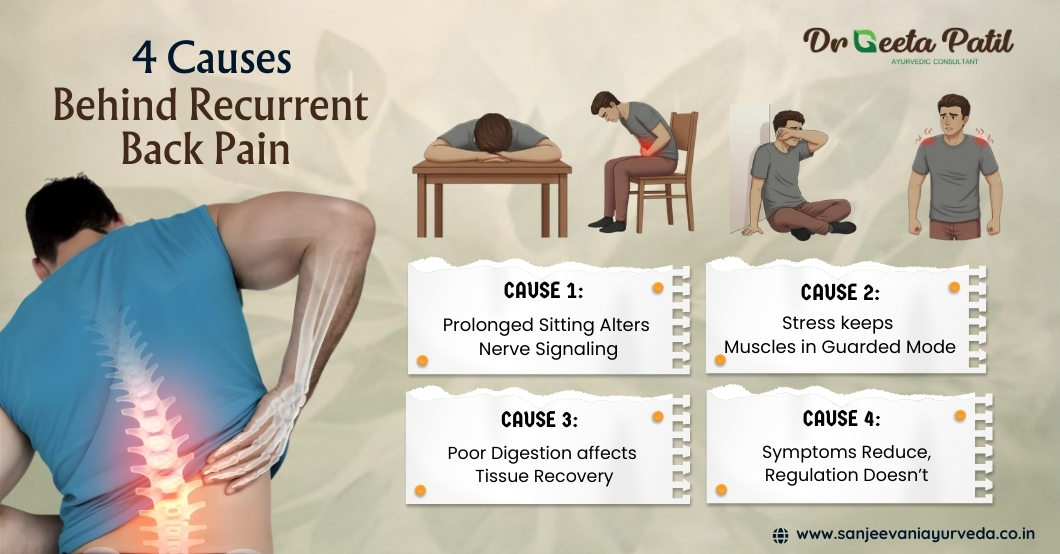
4 Reasons Behind Recurrent Back Pain
An Ayurvedic Perspective on Why Back Pain May Recur
Modern medicine often focuses on symptom relief — painkillers, anti-inflammatories,
physiotherapy, or surgery. While these approaches can provide short-term relief, they may
not always address underlying functional imbalances that can contribute to recurring
pain.
According to Ayurveda, recurrent back pain is not just a structural issue but a
manifestation of disturbed internal regulation — especially an imbalance in Vata Dosha, the
bio-energetic force governing movement, nerve impulses, circulation, and musculoskeletal
coordination. When Vata becomes aggravated, the system turns dry, unstable, and
hypersensitive — creating the foundation for recurring pain.
Below are four commonly observed reasons why back pain may recur - along with Ayurvedic
perspectives that may support long-term management.
Reason 1: Prolonged Sitting Disrupts Circulation & Nerve Flow
The Modern Sitting Epidemic
Many professionals sit 6–10 hours daily. Over time, this places constant pressure on the
lumbar spine and surrounding nerves.
The Ayurvedic Explanation
The pelvic region houses Apana Vata, responsible for downward movement and nourishment of
the lower body. Prolonged sitting compresses this region, leading to stagnation and
“Sroto-rodha” (blockage of channels).
Intervertebral discs depend on movement for nourishment. Lack of motion can impair
hydration, while surrounding muscles develop tension due to reduced circulation.
When Vata is considered aggravated in Ayurvedic understanding, symptoms may present
as:
- On-and-off aching
- Numbness or tingling
- Sharp pain when standing
- Morning stiffness
Ayurvedic management may include:
- Movement breaks every 45–60 minutes
- Gentle yoga (Balasana, Supta Matsyendrasana)
- Warm oil massage (Abhyanga) with medicated oils
- Warm, grounding Vata-pacifying diet
Reason 2: Chronic Stress Keeps Muscles in Guarded Mode
Stress and back pain are deeply connected. Individuals with ongoing anxiety or occupational
stress are more prone to chronic back issues.
In Ayurveda, stress aggravates both Vata (nervous system) and Pitta (inflammation). The body
remains in a low-grade fight-or-flight state, causing continuous muscle contraction around
the spine.
Over time:
- Blood flow reduces
- Waste products accumulate
- Muscles remain semi-contracted
- Morning stiffness worsens
This may resemble what modern science describes as central sensitization - a state of
heightened pain perception even without major structural findings.
Ayurvedic approaches include:
- Shirodhara
- Nasya therapy
- Nadi Shodhana (alternate nostril breathing)
- Adaptogenic herbs to calm the nervous system
Reason 3: Weak Digestion Impairs Tissue Recovery
Ayurveda emphasizes the gut-spine connection. Healthy spinal tissues require proper nutrient
absorption.
Agni – The Digestive Fire
When digestive strength (Agni) weakens due to irregular eating, stress, or incompatible
foods, partially digested residues called Ama accumulate. Ama obstructs tissue nourishment
and promotes inflammation.
Poor digestion may contribute to suboptimal absorption of:
- Vitamin C (collagen repair)
- Magnesium (muscle relaxation)
- Vitamin D & Calcium (bone health)
- Omega-3 fatty acids (inflammation control)
Ayurveda interprets this as relative weakness of Asthi Dhatu (bone tissue) and Majja Dhatu
(nerve tissue), which may increase susceptibility to degeneration and recurrent
discomfort.
Supportive measures include:
- Trikatu for digestive stimulation
- Triphala for gentle detoxification
- Castor oil (Eranda) for Vata-type inflammation
- Warm, cooked, easy-to-digest meals
Reason 4: Symptoms Subside, But Imbalance Persists
Symptom relief does not always indicate complete functional recovery.
Medications may block pain perception without correcting underlying imbalance. Muscles may
strengthen, but digestive weakness, stress patterns, or Vata aggravation may remain
unresolved.
Ayurveda identifies this as treating the symptom (Vyakta) without correcting the cause
(Nidana) and disease pathway (Samprapti).
Persistent triggers include:
- Sedentary habits
- Poor sleep
- Chronic stress
- Improper diet
- Seasonal Vata aggravation
If these factors remain unaddressed, the possibility of recurrence may increase.
The Ayurvedic Path Forward: Restoring Functional Balance
From an Ayurvedic perspective, effective management often involves a multi-layered
approach.
1. Stabilizing Vata
Therapies such as:
- Kati Basti
- Pinda Sweda
- Basti (considered one of the important therapies for Vata-related disorders in Ayurveda)
These help pacify Vata and nourish lumbar tissues.
2. Strengthening Digestion
Formulations like:
- Yogaraj Guggulu
- Maharasnadi Kwath
- Rasnasaptaka Kwath
- Ashwagandhadi Lehyam
(To be selected by a qualified Ayurvedic practitioner based on individual constitution and
clinical assessment)
3. Regulating the Stress Response
Yoga, pranayama, and meditation shift the nervous system from fight-or-flight toward
rest-and-repair — helping create a physiological environment that may support
recovery.
4. Lifestyle as a Foundational Therapeutic Support
Daily routine (Dinacharya), seasonal alignment (Ritucharya), ergonomic adjustments, proper
sleep, and consistent nourishment form the foundation of long-term recovery.
Conclusion
Recurrent back pain is often influenced by multiple interconnected factors. It is often a message from the body indicating persistent imbalance. By addressing Vata imbalance, digestive strength, stress regulation, and lifestyle patterns, Ayurveda provides a holistic framework that aims to support long-term balance and functional well-being rather than focusing solely on symptom suppression.
Dr. Geeta Patil
Sanjeevani Ayurveda